So many of the conventional products we are accustomed to using are actually full of chemicals and ingredients that aren’t actually beneficial to our health! I wanted to share simple ways you can reduce toxins in your kitchen!
If this is the first you’re learning about this, I recommend you read more about Why I Switched To Non-Toxic Products. We have also become accustomed to products that create a large amount of unneccessary waste for our own convenience.
There are easy & affordable swaps we can make to create a healthy, non-toxic and low-waste kitchen!
DITCH THE NON-STICK PANS
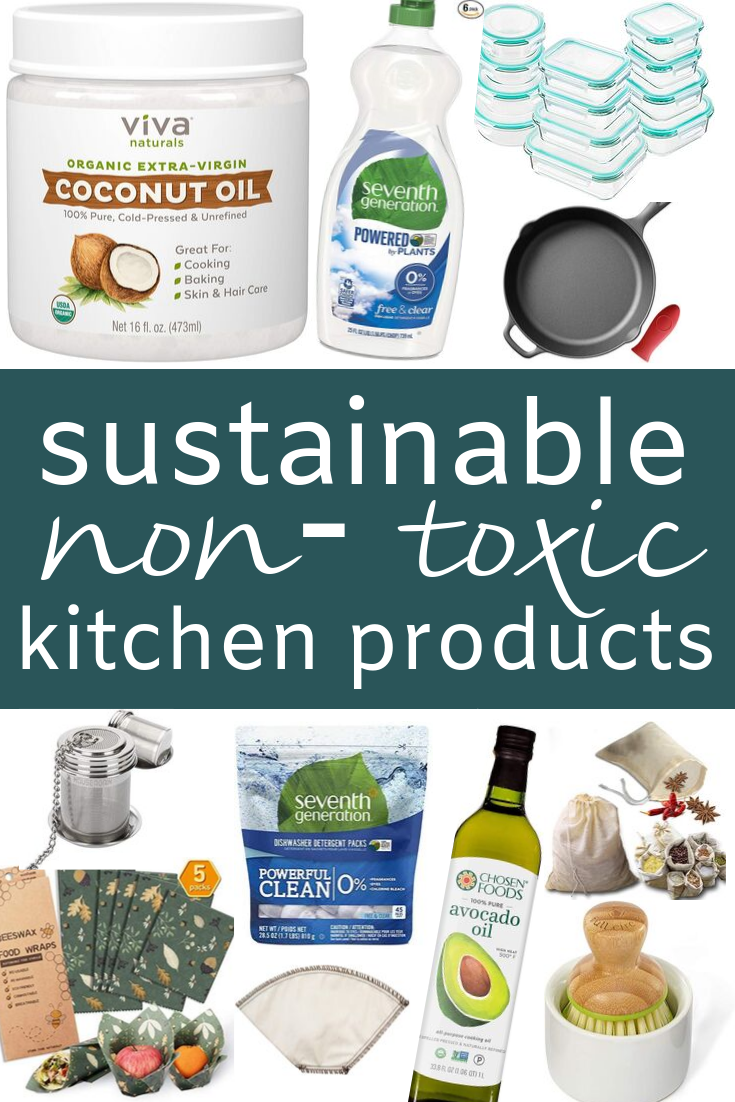
It took me way too long to ditch my old non-stick pans! I grew up using Teflon pans and was intimidated by the thought of using cast-iron. One day I decided to just go for it and purchase a cast-iron pan, and I immediately fell in love! If you want to learn more about the products used to make a pan “non-stick”, I recommend the Netflix Documentary “The Devil We Know“.
Cast-iron is not only free from toxic ingredients, but it lasts forever if properly taken care of, it cooks more evenly, and it adds iron into our food which many people are deficient in!
There is a learning curve with cast-iron, but it’s worth it!
My favourite cast-iron pans: 12 inch , 10 inch


SWAP TO HEALTHY FATS:
Many people chose cheap cooking oils like canola oils or vegetable oils. These polyunsaturated fats are easily oxidized, or in other words they are easily damaged when exposed to heat. This leads to the development of free radicals in our bodies which causes cell damage, inflammation and many serious health issues. Much better alternatives for cooking are coconut oil, avocado oil or extra virgin olive oil. Read more about unsaturated fats here.
My favourite cooking oils: Coconut Oil, Avocado Oil, EVOO


REPLACE YOUR PLASTIC CONTAINERS WITH GLASS
You’re probably familiar with the negative impacts of BPA. BPA is something I chose to avoid because over time it leaches into your food and water, especially when heated. These chemicals have been proven to have negative impacts especially on hormonal health.
There is a rising demand for BPA-free products. The problem is that when a product is labelled BPA-free, you don’t know what it actually IS made of. New materials such as BPS and BPF are replacing BPA and are just as, or more, toxic.
I prefer to use glass containers to store leftovers and baking ingredients. These are amazing because you can put them in the fridge, freezer, microwave or even oven! I find them very durable, even with a husband who isn’t very gentle with them! Hahaha.
A few more glass container options: here, and here.


TRY BEESWAX COVERS
This year I’ve been working on ditching plastic wrap. I never liked purchasing it because it felt wasteful, but still felt myself grabbing for it at home occasionally. I finally purchased beeswax wraps, and I LOVE them! They are so easy to use & wash.
Great options for beeswax wraps: here, here, here


THROW AWAY THE PLASTIC DISH BRUSH
Dish brushes are something we may overlook while making swaps in our home, but they are generally made out of plastic which as a rule I try to avoid in my kitchen! Plastics are generally made from petroleum and other synthetic ingredients. They also take hundreds of years to break down in landfills!
Bamboo dish brushes are a much better alternative, especially when you can just replace the head instead of the whole brush.


USE REUSABLE TEA BAGS/COFFEE FILTERS
I recently learned that tea bags and coffee filters can contain plastic! They also produce a large amount of unnecessary waste! There are great options that are very affordable, plastic free and reusable.
Tea Infuser , Cotton Coffee Filter , Cotton Tea Bags


USE A NATURAL DISH SOAP
Popular dish soaps contain ingredients like parabens, pthlalates, fragrance/parfum, dyes, sulfates. Not only are these ingredients harmful to our environment when they reenter our water supply, but they are linked to dozens of health problems in humans. Read more about why switching to non-toxic products is important.
There are several companies that make budget friendly, non-toxic dish soaps that work just as well!
ECOS, SG Dish Soap, SG Dishwasher, Nature Clean


REPLACE YOUR CUTTING BOARDS
Cutting boards are another place where plastics can hide. Plastic cutting boards eventually get dents and marks in them, and every time this happens plastic has the potential to leach into the food you are cutting! I love using wood cutting boards for veggies, and glass cutting boards for meats!
Glass Board, Bamboo Board, Bamboo Set


SKIP “GREEN” PRODUCTS
Non-toxic products are becoming more and more popular, which is amazing! But because of that, companies are jumping onto the green product bandwagon, without actually doing the work to create products that ARE safe.
Unfortunately, any company can use words such as “natural”, “non-toxic”, “green”, “clean” without going through any vetting.
There are no guidelines or laws in place to ensure that marketing terms are used appropriately. This is called “greenwashing” and it is becoming more and more popular.
It is imperative that you learn how to read product labels for yourself. Don’t trust what the label says without doing your own research!
If this was helpful, be sure to pin it for later or to share with a friend!